What is biochar?+
Biochar looks much like charcoal, but it is made for a different purpose. It is produced from suitable waste or residual biomass in a controlled, low-oxygen process called pyrolysis. For carbon removal, biochar is not burned: its stable carbon is retained in soil or another durable application. Quality-controlled biochar is tested to ensure that it meets the requirements for its intended use. CL-GreenTech helps select suitable feedstock and process conditions and organize the necessary testing—so that the biochar meets the requirements for carbon removal and its intended physical application.
What is pyrolysis?+
Pyrolysis is the thermal conversion of biomass with little or no oxygen. It produces solid biochar and energy-rich gases and vapors. Part of that energy can be recovered as useful renewable heat. The choice of technology, equipment and process parameters influences the quantity and quality of both the heat and the physical biochar produced. CL-GreenTech helps you make the right decisions for your goals.
Which biomass streams are suitable for pyrolysis?+
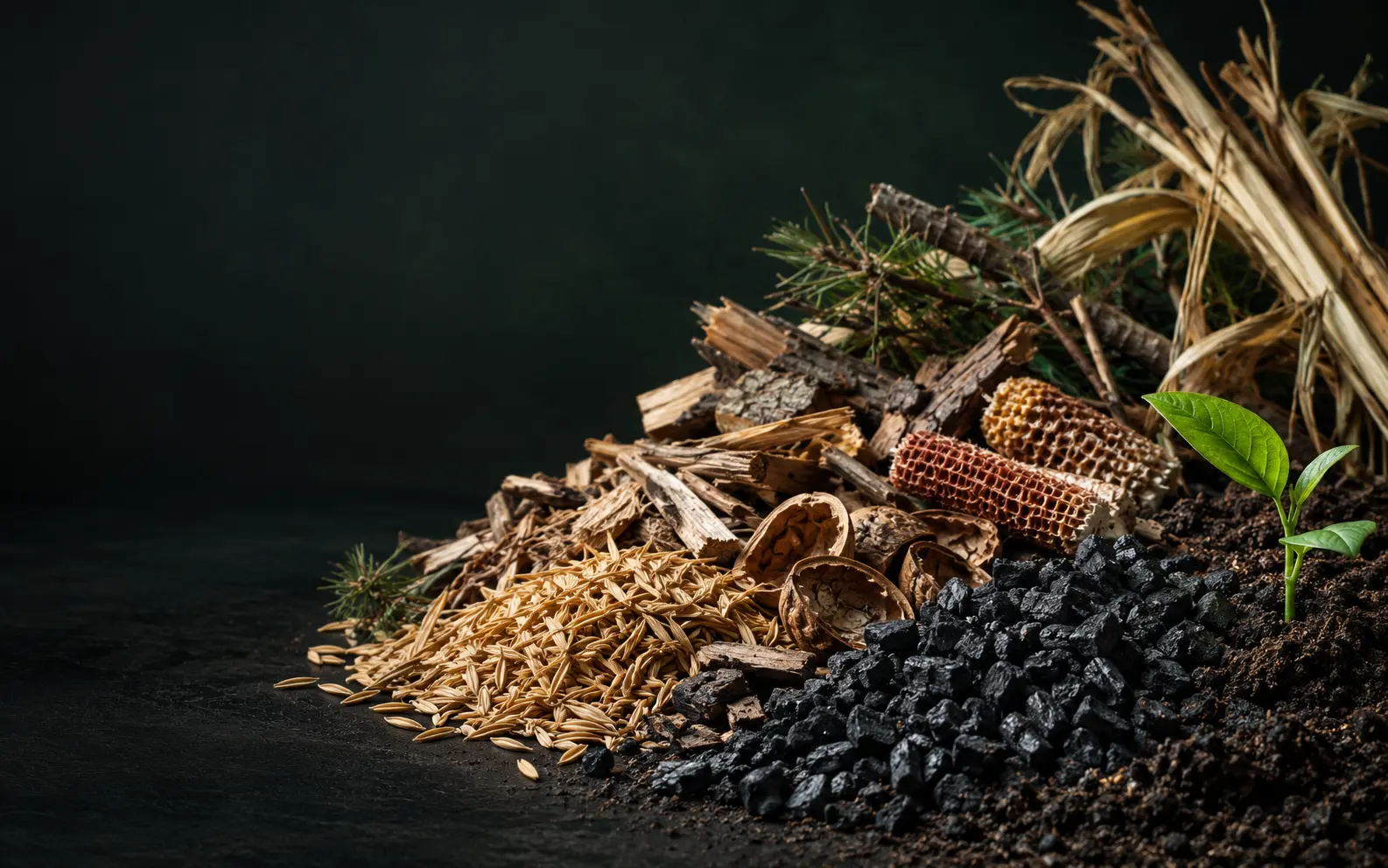
Potential feedstocks include wood residues; agricultural residues such as straw, husks and stalks; food-processing residues such as shells and fruit pits; and green or landscaping residues. Manure and biogas digestate may also be suitable with the right technology. Each stream must be checked for moisture, ash, contaminants, particle size, seasonality and current use. CL-GreenTech can help organize the necessary laboratory analyses and interpret the characterization results.
What renewable energy can I obtain from pyrolysis?+
Pyrolysis primarily provides useful heat. Depending on the plant and local demand, it can supply hot water, steam, drying or other process heat and potentially district heating. Some systems can also generate electricity or combined heat and power. Actual output depends on feedstock, moisture, plant design and how effectively the heat is used. CL-GreenTech can help identify the technology best suited to your energy needs.
Why not simply burn the biomass?+
Combustion generally maximizes immediate heat, but returns almost all of the biomass carbon to the atmosphere as CO₂. Pyrolysis produces less heat while retaining a substantial share of that carbon in stable biochar—enabling durable carbon removal and useful soil applications. The better choice depends on the value of energy, carbon removal and suitable local biochar applications.
When does a biochar project make economic sense?+
A project is most attractive when several value streams work together. Carbon removals can create value through the sale of verified credits or an internal carbon price. Pyrolysis heat can reduce costs and emissions when it replaces fossil fuels—especially where those fuels are expensive. Biochar can create further value as a soil amendment through improved water retention, nutrient use and soil performance. CL-GreenTech assesses these three pathways together.
How much biomass is needed?+
There is no universal minimum: pyrolysis equipment is available at different scales and in different configurations. The right choice depends on the available biomass volume and consistency, transport distance, labour cost and availability, operating hours, and whether the heat and biochar can be used locally. CL-GreenTech helps select the technology and project scale best suited to these conditions.
Does every biochar project qualify for carbon-removal credits?+
No. Eligibility depends on feedstock, additionality, process controls, product quality, end use, monitoring and the chosen certification methodology. These questions should be checked at the beginning. CL-GreenTech can assess these requirements early and help identify a suitable certification pathway.
How can biochar improve soil performance?+
Adding biochar increases soil organic carbon. When the biochar, soil, crop and application rate are well matched, biochar can also improve water retention, nutrient use, soil structure and microbial habitat. This may reduce irrigation demand, increase resilience to heavy rainfall, lower nitrogen runoff, improve fertilizer efficiency, support soil fertility and crop yields and reduce N₂O emissions. Before application, biochar can also be “charged” or inoculated by mixing it with compost or another nutrient-rich material, allowing it to carry nutrients and beneficial microorganisms into the soil. CL-GreenTech can support the site-specific assessment needed to evaluate these benefits and select an appropriate biochar and application strategy.
What are science-based targets, SBTi and FLAG emissions?+
Science-based targets define how much and how quickly a company must reduce its emissions, in line with the latest climate science to limit global warming to 1.5°C and reach near-term and net-zero goals. The Science Based Targets initiative (SBTi) provides the standards, tools and guidance for setting them.
FLAG emissions are greenhouse-gas emissions from forests, land and agriculture in a company’s operations and value chain. They include emissions from land-use change, such as deforestation; farming and land management, such as livestock, fertilizer, manure and biomass burning; and changes in the carbon stored in forests and soils. Companies in designated FLAG sectors—and other companies whose FLAG emissions make up at least 20% of their total Scope 1, 2 and 3 emissions—must set a separate FLAG target under SBTi. CL-GreenTech can help determine whether these requirements apply and how biochar-related emissions and removals should be assessed.
How can biochar support an SBTi net-zero target?+
Biochar can support an SBTi net-zero target in two ways. First, when the applicable accounting and verification conditions are met, applying biochar to soils within a company’s value chain may count as a FLAG removal by increasing soil organic carbon. It can also reduce FLAG emissions through better nutrient use and lower N₂O emissions, while providing co-benefits such as improved soil fertility and reduced nitrogen runoff. Second, biochar removes CO₂ from the atmosphere and stores the carbon for the long term. Verified biochar CDR credits can therefore be used to neutralize residual emissions at the net-zero target year, after the company has made the required deep emissions reductions. Eligibility depends on the SBTi, FLAG and greenhouse-gas accounting requirements applicable at the time of assessment. CL-GreenTech can help assess which pathway applies and what evidence is needed.
How does SBTi distinguish value-chain removals, insetting, offsetting and neutralization?+
Under the SBTi FLAG Guidance, land-management CO₂ removals within the value chain may count toward a FLAG target when the relevant accounting, traceability, storage and monitoring requirements are met. The guidance explicitly names biochar amendments as a way to increase soil organic carbon.
Insetting is a broad, non-standardized term for climate action within the value chain; the label alone does not make an activity eligible toward an SBTi target.
Offsetting means using mitigation outside the value chain. Companies cannot use offsetting as a substitute for reducing value-chain emissions or to meet their science-based targets.
Neutralization uses durable CO₂ removals to counterbalance residual emissions at and after the net-zero target year.
CL-GreenTech helps determine the appropriate route and evidence.
What information is needed for a first assessment?+
Tell us your biomass type, annual volume and location, plus what you want to achieve—carbon removal, renewable heat, soil improvement, waste reduction or a combination. The request form collects these essentials so CL-GreenTech can understand your priorities and identify the most relevant next step.
What happens after I contact CL-GreenTech?+
We review your biomass, annual volume and priorities, then arrange an initial conversation to clarify the opportunity. From there, CL-GreenTech can determine whether a more detailed feedstock, technology and project assessment is justified and propose the appropriate next step.